According to the global financial services major, since the last RBI policy meet, data suggest accelerating growth and surprisingly mild inflation, both at the core and headline level.

It is important to note that slowdown in activity is really confined to a selected few regions within China.

The resentment against the government has increased.

This is a terrible situation for a growing economy to be in, and the central bank would be expected to act to correct the situation.

The Reserve Bank of India unexpectedly raised its policy interest rate on Tuesday by 25 basis points (bps) but said that if consumer price inflation eases as projected, it does not foresee further near-term tightening.

The index has posted below the 50 mark, which marks contraction, for the third consecutive month.

D&B sees January IIP to decline by 0.5-1.5 per cent. Last month the factory output, as measured in terms of the index of industrial production, had contracted by 0.6 per cent.
As investors try to second-guess the US Fed, corporate and election results could have a bearing on market direction

If customers did not see value in what we provide them at the price point at which we provide these, they would not have been there with us in such a competitive market, says HDFC deputy managing director Paresh Sukthankar.

RBI Governor Raghuram Rajan has noted the contradiction.

NTPC, Sun Pharma Coal India and Asian Paints were among top losers on BSE Sensex

Across the board, demand would appear to be slacker than it should be if we are headed for a healthy recovery.

Credit profiles have turned healthier from a year ago

Bankers need to take a call on whether they will allow technology firms to run banks or banks themselves will turn into tech firms, says Tamal Bandyopadhyay.

The RBI kept interest rates unchanged at 8 per cent as widely expected.

Food inflation was 7.79 per cent last month, higher than a revised 7.47 per cent in May

India's manufacturing sector activity contracted for the second consecutive month in September as both output and new orders witnessed a decline, an HSBC survey said.

Inflation targeting framework is now enshrined as a formal agreement by the government and the RBI; thus, it may seem that we are flogging a dead horse, says Soumya Kanti Ghosh.

Five per cent growth is disappointing but only after having reached nine per cent. However, it is still not all that bad, says Andrew Michael Spence.
Addressing bankers and economists at Bancon 2013, a flagship event of the Indian Banks' Association, Chidambaram told the lenders to deal firmly with wilful defaulters, but handhold those who are reeling under the impact of the economic slowdown.

The upbeat earnings from Reliance Industries will set the tone for the truncated week ahead

The finance ministry and RBI must get less conservative and improve co-ordination.
.jpg)
The plan being negotiated by US Senate leaders would end a partial government shutdown and raise the debt ceiling by enough to cover the nation's borrowing needs at least through mid-February 2014, a source familiar with the negotiations told Reuters.

Raghuram Rajan, who was Chief Economic Advisor in the Finance Ministry before taking over as RBI Governor on September 4, is scheduled to announce the next mid-quarter policy review on December 18.

Although the current long-term bullish trend is intact, markets are awaiting clarity on the taper and the Assembly election results.

The technical report of the NSSO has generated controversy following its observation that as much as 36 per cent units forming part of MCA-21 database, used in computing GDP, could not be either identifiable or traceable in the field.

After lagging behind other segments in the automotive (auto) space over the past few years, two-wheelers are expected to reverse their volume underperformance. After witnessing a 36.3 per cent volume decline over the 2018-19 (FY19) through 2021-22 (FY22) periods, the sector staged a recovery in 2022-23 (FY23), with volumes rising 17 per cent. While volumes are still a quarter lower than the FY19 peak of 21 million units, a double-digit growth trajectory is expected to prolong.
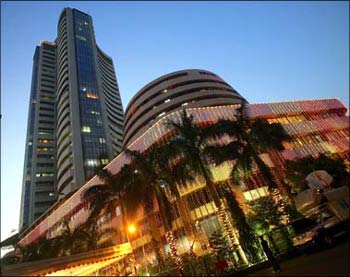
The longest winning streak was the six years between 2002-2007 when the Nifty moved from around 1,000 to over 6,000.

ICICI Bank was the top gainer after stable rating for its senior unsecured bonds by S&P Global Ratings.
It is also likely to assume a deflator of around 4 per cent. That could take the nominal GDP outlook for FY21 to around 10 per cent. It is this nominal GDP forecast on the basis of which the finance ministry is calculating key Budget targets like the fiscal deficit as a percentage of GDP and tax revenue growth for the coming year.

Shares of rate sensitive sectors such as realty, infrastructure, banking and automobiles ended higher ahead of the Reserve Bank of India (RBI) mid-quarter policy review on June 17.

After Raghuram Rajan leaves, the world for the succeeding RBI governors will be distinctly different.

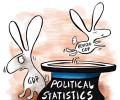
One way to do a reality check on the official numbers will be to develop a desi version of what came to be called the Li index in China.
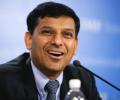
The Governor, who completes one year in RBI on Wednesday, has stabilised the rupee and is getting a fix on inflation.

The economic survey for 2020-21 has suggested revision in the weightage of food items to gauge the true picture of inflation in the country, and said new sources of price data also need to be incorporated in the wake of increasing retail e-commerce transactions. As per the survey, the current spike in consumer price-based retail inflation of food prices is mainly a supply-side phenomenon. The survey noted that the weights of all items in retail inflation are based on the NSO household consumption expenditure survey of 2011-12, adding the weight of food items in the index might have significantly decreased over the decade since then.

A strong set of industrial output numbers for January provided the perfect backdrop to reap more dividends, with the IIP having expanded 2.7 per cent year-on-year.

The government is somehow convinced that selective low-rate lending will stimulate demand and accelerate economic growth that plunged to a four-year low of 4.4 per cent in the first three months of 2013-14.

Capital inflows continued to aid the rupee's rise, although a strong dollar overseas capped the gains.

The broader markets were also in top gear, with the BSE midcap index surging by 2.1% at 11,431 and the smallcap index gaining 1.4% at 11,735.

Many things could play spoilsport for the Indian economy.
 © 2026 Rediff.com - Advertise with us - Disclaimer - Privacy Policy - Sitemap - Feedback - About us - Terms of use - Grievances